
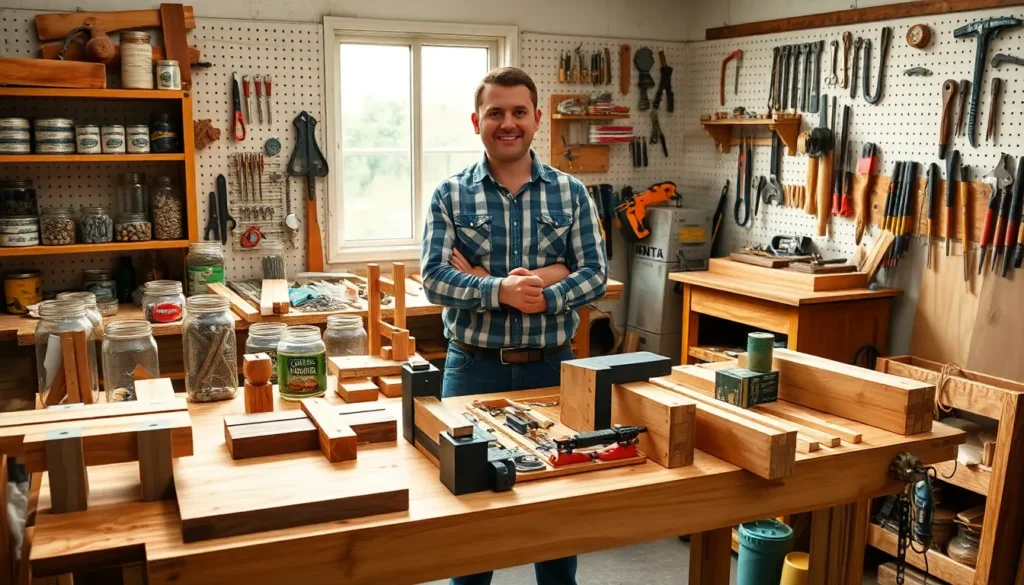
Make at home tools offer a practical way to expand any workshop without spending a fortune. Many DIY enthusiasts discover that common household items can transform into functional equipment. Others find satisfaction in building their own woodworking jigs, clamps, and metalworking aids from scratch.
This guide covers the essential techniques for creating homemade tools. Readers will learn which everyday objects work best as tool substitutes. They’ll also discover step-by-step approaches for building wooden and metal workshop equipment. Whether someone needs a quick fix or wants to start a new project, these DIY solutions deliver real results.
Table of Contents
ToggleKey Takeaways
- Make at home tools from household items like containers, kitchen utensils, and old clothing to save money and expand your workshop.
- Build DIY clamps using threaded rod, nuts, and scrap hardwood for a fraction of store-bought prices.
- Create essential woodworking jigs like shooting boards and miter sleds to improve accuracy on every project.
- Use hardwoods like maple, oak, or beech when constructing homemade tools for durability and longevity.
- Always test your make at home tools with gradual pressure before full use to identify and reinforce weak points.
- Maintain wooden tools with paste wax and protect metal components with light oil to extend their lifespan.
Essential Household Items to Repurpose as Tools
The average home contains dozens of items that double as workshop tools. Smart DIY builders recognize these opportunities and save money in the process.
Containers and Storage Items
Plastic containers serve multiple workshop purposes. An old yogurt cup holds small screws and nails during projects. Coffee cans work as parts washers when filled with solvent. Glass jars organize hardware by size and keep contents visible.
Cardboard tubes from paper towels store extension cords without tangling. They also protect saw blades during storage. Egg cartons separate and organize small components like nuts, bolts, and washers.
Kitchen Items That Make Great Tools
Wooden spoons work well for mixing epoxy and wood filler. Metal spatulas scrape dried glue from work surfaces. Rubber bands clamp small glue joints when proper clamps won’t fit.
Butter knives pry open paint cans safely. Old toothbrushes clean threads on bolts and reach tight spaces. Ice cube trays sort tiny parts during disassembly projects.
Clothing and Fabric Repurposing
Old t-shirts become excellent shop rags. Cotton fabric absorbs oil and cleans surfaces without leaving lint. Leather belts transform into strop surfaces for sharpening chisels and plane blades.
Thick socks protect tool handles during storage. They also cushion delicate parts when carrying items in toolboxes. Denim from worn jeans creates durable tool rolls for organizing wrenches and screwdrivers.
Simple Woodworking Tools You Can Build Yourself
Woodworkers can make at home tools that match or exceed store-bought quality. These projects require basic materials and moderate skill levels.
Homemade Clamps and Holding Devices
Bar clamps cost significant money at hardware stores. DIY versions use threaded rod, nuts, and scrap wood blocks. Drill holes through hardwood pieces, insert the rod, and add wing nuts for pressure adjustment.
Bench dogs hold workpieces flat on any surface. Cut wooden dowels to fit holes drilled in a workbench top. Add a slight taper to one end for easy insertion and removal.
Spring clamps result from repurposing old clothespins. Glue several together for increased holding power. They work perfectly for light-duty glue-ups and holding templates.
Marking and Measuring Tools
A marking gauge requires only a stick of hardwood and a small bolt. Drill a hole near one end, insert the bolt as a marking point, and add a fence that slides along the beam.
Story sticks eliminate repeated measurements. Cut a board to specific project dimensions and mark all critical points. This make at home tool prevents errors when building multiple identical parts.
Winding sticks check boards for twist. Make two identical straight pieces from stable wood. Place them at opposite ends of a board and sight across the tops to detect any warp.
Jigs and Guides
A shooting board improves hand plane accuracy. Glue a fence perpendicular to a flat base. The plane rides along the base while trimming end grain square.
Miter sleds work with any table saw. Build a platform that slides in the miter slot and add an angled fence. This jig cuts perfect 45-degree angles every time.
Homemade Metalworking and Hardware Solutions
Metal projects require different approaches, but homemade solutions still work well. These make at home tools handle common metalworking tasks.
Basic Metalworking Equipment
A center punch starts holes for drilling. Grind a point on a large nail or bolt. Harden the tip by heating it red-hot and quenching in oil.
Sheet metal brakes bend thin stock accurately. Build a wooden version with two boards hinged together. Add a clamping bar to hold material in place during bending.
A magnetic parts tray keeps small hardware organized. Glue strong magnets inside a shallow container. Screws and nuts stay put even when the tray tips.
Hardware and Fastener Solutions
Custom bolts come from cutting threaded rod to length. Add nuts and washers for any application. This approach costs far less than buying specialty fasteners.
Spacer blocks maintain consistent gaps during assembly. Cut scrap wood or metal to exact thicknesses. These blocks speed up repetitive tasks and improve accuracy.
Threaded inserts install easily with a homemade driver. Weld a bolt head to a socket wrench insert. This tool spins inserts into wood without slipping.
Finishing Tools
Sanding blocks require flat scrap and adhesive-backed paper. Cut blocks to comfortable sizes for different applications. Cork or rubber surfaces add cushion for detailed work.
Burnishing tools polish metal edges. Old screwdriver shafts work when properly polished. They create smooth finishes on cut edges and remove burrs.
Tips for Safe and Effective DIY Tool Making
Safety matters most when people make at home tools. Poor construction leads to injuries and project failures. These guidelines ensure better results.
Material Selection
Hardwoods outperform softwoods for tool construction. Maple, oak, and beech resist wear and hold up under pressure. Avoid pine and similar species for load-bearing components.
Metal parts need proper grades for their applications. Mild steel bends easily but lacks strength for cutting edges. Tool steel holds an edge but requires heat treatment.
Reclaimed materials save money but require inspection. Check wood for hidden nails and cracks. Examine metal for rust damage that weakens structural integrity.
Construction Best Practices
Measure twice before cutting anything. Accurate dimensions prevent wobbly results and wasted materials. Use quality measuring tools for layout work.
Joints need proper reinforcement. Glue alone fails under stress. Add screws, dowels, or bolts to critical connections.
Test each make at home tool before full use. Apply gradual pressure to check for weak points. Replace or reinforce any component that flexes or creaks.
Maintenance Requirements
Wooden tools need occasional waxing. Paste wax prevents moisture absorption and keeps surfaces smooth. Apply a thin coat and buff to a soft sheen.
Metal components require rust prevention. Light machine oil protects exposed surfaces. Store tools in dry locations away from humidity.
Sharp edges need regular attention. Dull cutting tools work harder and produce poor results. Maintain edges with stones, files, or sandpaper as appropriate.

